
Concrete Retaining Walls in Nashville
Middle Tennessee's clay-heavy hillside soils exert lateral pressure that undersized retaining walls can't resist. We engineer drainage and reinforcement for the actual conditions, not the ideal ones.
Every Retaining Walls Project Includes
Hydrostatic Drainage Engineering
Every retaining wall we build includes engineered drainage behind the wall: drainage aggregate, perforated pipe, and weep holes at grade level to relieve hydrostatic pressure before it builds to structural failure levels.
Soil-Appropriate Reinforcement
Reinforcement sizing and spacing is calculated based on the wall height, surcharge load, and soil conditions at your specific site. We do not apply a standard rebar pattern to every wall, the specification responds to the actual lateral pressure the wall must resist.
PSIP Structural Concrete
4000 PSI mix, properly consolidated, provides far greater resistance to the freeze-thaw cycles and moisture fluctuations that retaining walls face than standard 3000 PSI residential concrete.
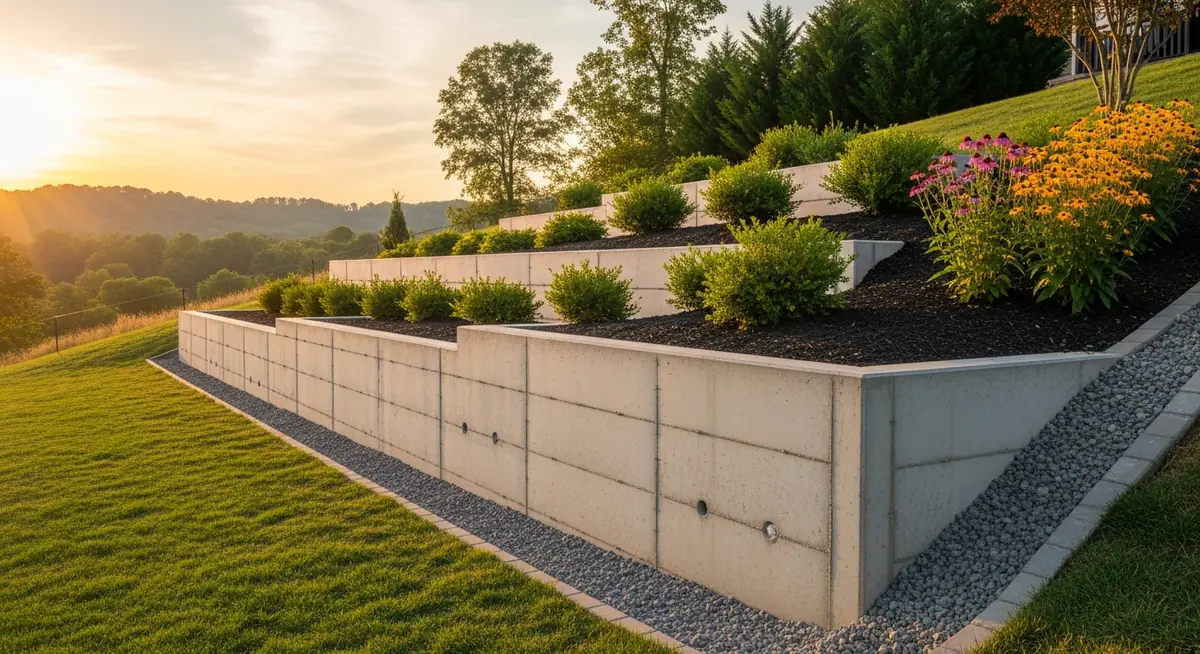
Real Pumas Job Site · Nashville, TN
How We Deliver Retaining Walls
Site Topography Assessment
We evaluate grade change, retained soil depth, surcharge loads (structures, vehicles, or plantings above the wall), and soil composition before specifying any wall dimensions or reinforcement.
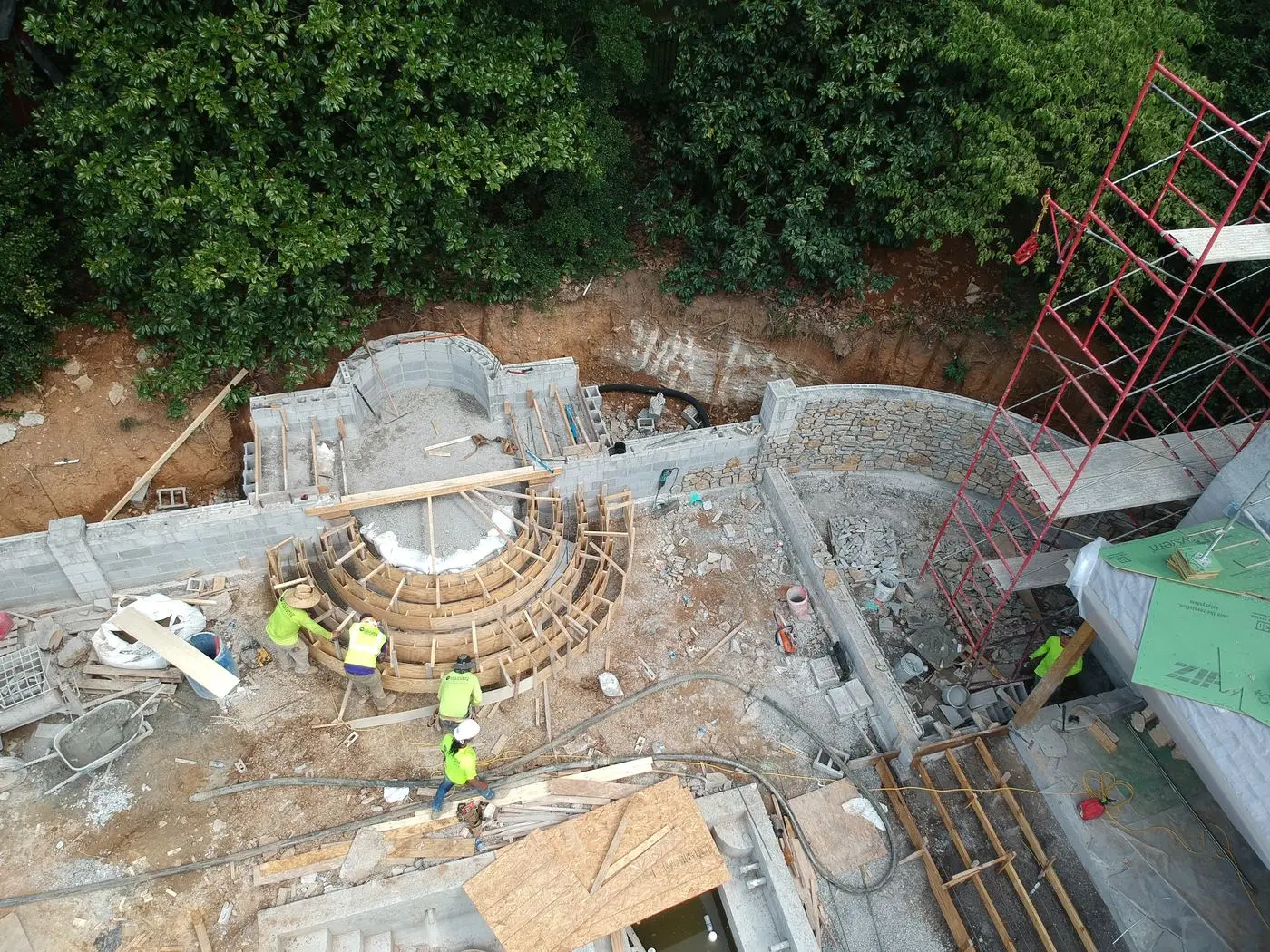
Drainage System Design
Drainage infrastructure is designed behind the wall: drainage aggregate layer, perforated drain pipe, and weep hole layout. This is specified before formwork begins.
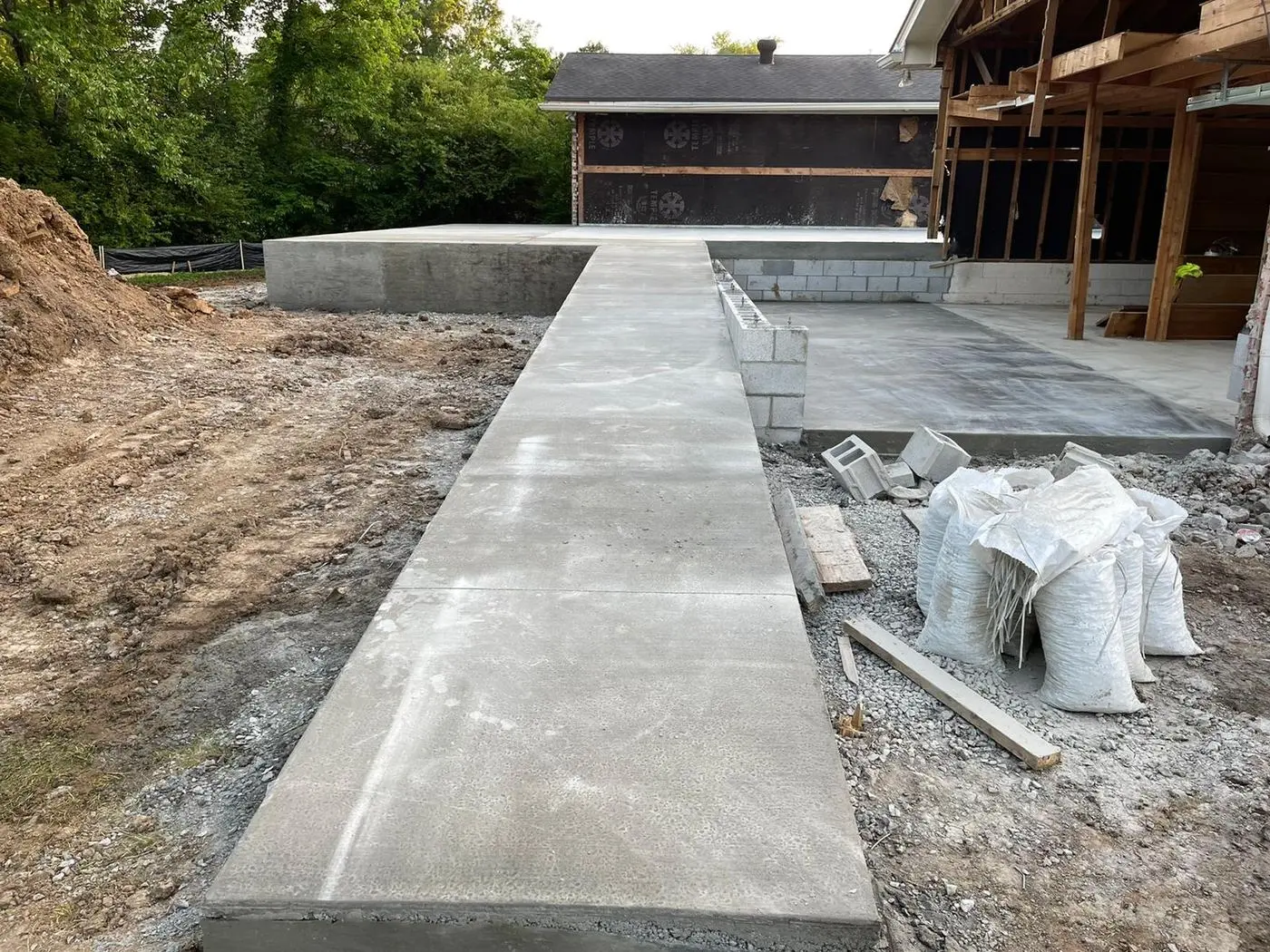
Foundation & Footing
Retaining wall footings are excavated below frost depth and sized to the wall height and load. A proper footing is the most overlooked element of residential retaining wall construction.
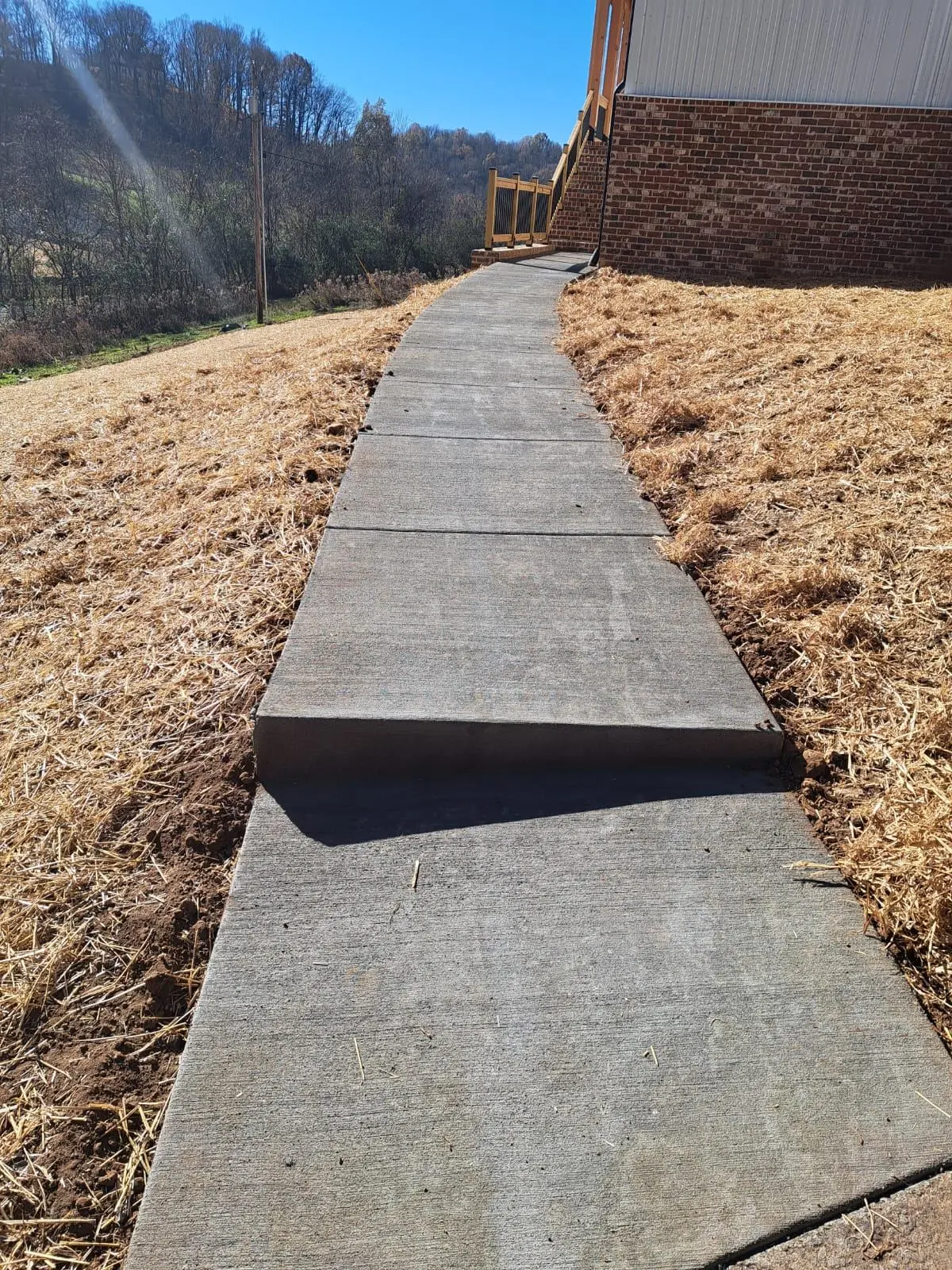
Reinforcement & Pour
Rebar placed per the engineered specification, concrete pump-poured and properly consolidated to eliminate voids, a critical quality step for retaining walls that bear continuous lateral load.

Drainage Installation & Backfill
Drainage aggregate and pipe are installed behind the wall before backfilling. Backfill is placed in compacted lifts, not dumped, to prevent surcharge loading that exceeds the wall's designed capacity.
Discuss Your Project Why Middle Tennessee Clay Changes the Retaining Wall Equation
Retaining walls in Middle Tennessee face a unique engineering environment. Clay soils absorb water and expand during wet seasons, exerting significant lateral pressure against any vertical structure. Without proper drainage relief, perforated pipe behind the wall, drainage aggregate, weep holes through the face, that hydrostatic pressure builds until the wall fails. Most residential retaining wall failures in this region are drainage failures first, structural failures second. We engineer both simultaneously.
Hydrostatic drainage is not optional. Every retaining wall we build includes engineered drainage behind the wall: drainage aggregate placed in the void between the wall and the retained soil, perforated pipe at the base collecting water before pressure builds, and weep holes at grade level to release water that reaches the wall face. This is not an upgrade option, it is the standard specification for every wall we build in Middle Tennessee clay.
Reinforcement sized to the conditions, not to a standard. Reinforcement sizing and spacing is calculated based on the wall height, surcharge load, and soil conditions at your specific site. A 3-foot garden wall in stable soil and a 6-foot retaining wall in saturated clay with a driveway overhead require different reinforcement specifications. We calculate both, not apply a standard rebar pattern to every wall regardless of load conditions.
Footings matter more than the wall. The footing is the most overlooked element of residential retaining wall construction. A footing excavated above frost depth will heave in Tennessee winters. A footing undersized for the wall height will rotate under lateral load. We specify footings based on wall height, lateral load, and frost depth, and excavate to the specified elevation before forming begins.
For hillside Nashville properties. Brentwood, Bellevue, Hermitage, Thompson’s Station, Hendersonville, any property with significant grade change in Middle Tennessee’s clay terrain is a retaining wall candidate. We evaluate the full site topography and recommend wall system approaches, not just single wall specifications.
Retaining Walls Across Nashville’s Service Area
Pumas Concrete installs structural concrete retaining walls throughout Nashville and Middle Tennessee:
Nashville retaining walls: Urban Nashville properties, particularly in hillside neighborhoods like Sylvan Park, 12South, East Nashville, and Green Hills, often have significant grade changes between street level and the rear yard, or between adjacent lots. These situations require retaining walls that are engineered for urban drainage patterns and the lateral soil pressure accumulated after Nashville’s rain events.
Brentwood retaining walls: Brentwood’s rolling terrain, particularly in Governors Club, Annandale, and along Granny White Pike, involves grade transitions that require either cut-and-fill earthwork or retained terrace systems. We evaluate the full topography before recommending a wall approach.
Hendersonville and Sumner County retaining walls: The ridgeline properties along Old Shackle Island Road and the lakefront lots of Hendersonville often have dramatic grade changes requiring engineered retaining systems. Lakefront properties have additional hydrostatic considerations from water table proximity.
Franklin and Williamson County retaining walls: Franklin’s newer subdivisions, Westhaven, Fieldstone Farms, and the developments along Lewisburg Pike, involve grade transitions that the original builders managed with minimum-spec block retaining walls. We replace failing systems with engineered concrete.
What Makes a Concrete Retaining Wall Last in Tennessee
Tennessee’s clay-heavy soils and significant annual rainfall create conditions that fail poorly designed retaining walls at predictable rates. The failure is almost always drainage-related before it becomes structural.
The drainage sequence of failure. Clay soils absorb water slowly and release it even more slowly. During sustained rain, water builds up behind a retaining wall that lacks adequate drainage, increasing hydrostatic pressure against the wall face. An undersized wall without drainage relief, weep holes, perforated pipe, and aggregate backfill, is accumulating pressure every wet season until it cracks, tilts, or fails outright.
The footing depth problem. Middle Tennessee’s frost depth is approximately 8 inches, but retaining wall footings built only to frost depth still move seasonally in clay soils that expand and contract with moisture, not just temperature. We excavate footings below both frost depth and the active clay zone, which varies by site but is typically 12-18 inches in the Nashville metro.
Stepped wall systems for significant grade changes. For grade changes exceeding 5-6 feet, a single tall retaining wall is often the wrong solution, structurally, aesthetically, and from a permitting standpoint. Stepped wall systems, two or three walls at different elevations with usable terrace space between them, distribute lateral load across multiple structures, create accessible outdoor space, and are more easily permitted in Nashville’s hillside districts.
Retaining Wall Permits in Nashville and Middle Tennessee
Permit requirements for retaining walls vary by jurisdiction and wall height. General guidance for the Nashville metro:
- Under 4 feet: Usually no permit required in metro Nashville, Brentwood, and Franklin. Confirm with your municipality before construction begins.
- 4-6 feet: Building permit typically required. Nashville Metro may require a site plan.
- Over 6 feet: Building permit required in most jurisdictions, often with a structural engineer’s stamped drawing.
- Near property lines: Setback requirements apply regardless of height. Check with your municipality.
- Hillside properties: Some hillside overlay districts have additional requirements. We advise on this during the site consultation.
We can work with your engineer of record or refer you to a structural engineer for projects requiring stamped drawings.
Retaining Wall Cost in Nashville
Retaining wall cost varies significantly based on wall height, linear footage, drainage complexity, and site access. General cost ranges for concrete retaining walls in the Nashville market:
- Short walls (2-3 feet): Starting from $150-$250 per linear foot for simple sites
- Mid-height walls (4-6 feet): $300-$500+ per linear foot with drainage engineering
- Tall or complex walls (6+ feet): Highly variable, requires site-specific engineering
All Pumas Concrete retaining wall projects include drainage engineering (aggregate backfill, perforated pipe, weep holes), footings sized for actual conditions, and full structural documentation. Request a consultation for a written specification and estimate for your specific site.
PSIP Protocol. Applied to Every Project
4000 PSI Concrete · Full Rebar Grid · California Sand Finish · Structural Longevity Certificate
What Nashville Clients Say
Real homeowners and commercial clients across Middle Tennessee.
We are beyond thrilled with our new backyard patio from Pumas Concrete! Gumaro was our main contact throughout the entire project, and his expertise, passion, and clear communication made the whole pr…
Alana Seay
Backyard Patio
Nashville
I got three quotes. Los Pumas wasn't the cheapest, but they were the only ones who explained why my old driveway failed. Los Pumas gave me the PSIP certificate, showed me the rebar grid, and explained…
Samantha Toral
Driveway Installation
Nashville
Gumaro took the time to educate us on the Performance Structural Integrity Protocol (PSIP). He explained why the mandatory rebar reinforcement and the 4000 PSI mix are essential for longevity. Knowing…
Mary Fylypowycz
Driveway
Springfield, TN
As someone who manages commercial properties, finding a concrete contractor that shows up, communicates, and delivers quality work is rare. Los Pumas Concrete checked all the boxes. They handled our c…
Dakota Ballard
Commercial Concrete
Nashville
Stop Your Hillside From Becoming an Engineering Problem.
Retaining walls built without drainage engineering don't last in Tennessee clay. We design both, together, from the start.
Retaining Walls. Frequently Asked Questions
Common questions about retaining walls in Nashville, TN.
In most Nashville jurisdictions, retaining walls over 4 feet in height require a building permit and often an engineer's stamped drawing. We advise on local requirements during the site consultation and can work with your engineer of record or refer you to a structural engineer if required.
Hydrostatic pressure buildup behind the wall due to inadequate drainage. Clay soils in Middle Tennessee hold water for extended periods after rain events, creating significant lateral pressure against the wall face. A wall without proper drainage, aggregate backfill, perforated pipe, and weep holes, is fighting against accumulating water pressure every wet season until it fails.
Yes. Stepped wall systems, multiple walls at different elevations with planted or hardscaped terraces between them, are often the appropriate solution for significant grade changes. They distribute lateral load across multiple structures and create usable outdoor space at each terrace.
A PSIP-spec retaining wall with proper drainage engineering should last 50 years or more in Middle Tennessee conditions. The primary failure variable is drainage maintenance, keeping weep holes clear and ensuring drainage aggregate isn't clogged over time. We provide maintenance guidance as part of every retaining wall project.
Still have questions? We're happy to talk through your project.
Contact UsRelated Services
PSIP Certified Concrete
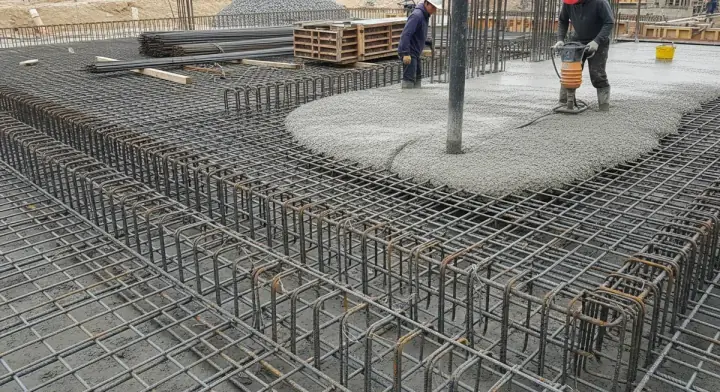
Every Pumas project follows the Performance Structural Integrity Protocol (PSIP): 4000 PSI mix, rebar on chair rails, pump-poured, and backed by a Structural Longevity Certificate.
Learn More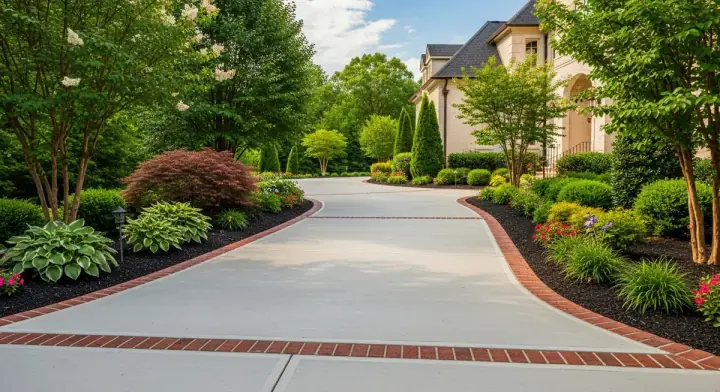
Concrete Driveway Installation
Professional driveway installation using PSIP-grade materials and techniques, proper drainage, full rebar reinforcement, and lasting curb appeal.
Learn More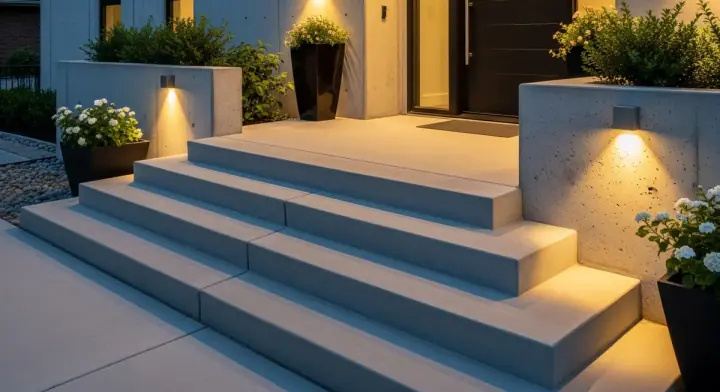
Concrete Steps & Entryways
Precision-formed concrete steps and entryways that create a lasting first impression, structurally sound, beautifully finished, and built to code.
Learn More