
Concrete Slab Installation in Nashville
Middle Tennessee's expansive clay soils move with every wet and dry cycle. A slab poured without proper base preparation and reinforcement will settle, crack, and tilt, predictably. We prevent all three.
Every Concrete Slab Installation Project Includes
Clay-Soil Base Engineering
We evaluate sub-base soil conditions before specifying base material depth, compaction procedure, and whether aggregate replacement of clay is required in portions of the footprint.
PSIP Reinforcement on Slabs
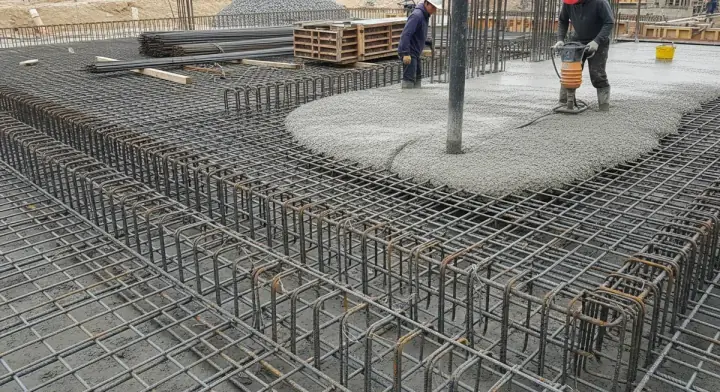
Full rebar grid on chair rails, the same reinforcement specification as our driveways, ensures the slab has tensile strength to bridge differential movement in the base below without cracking through.
Edge Thickening for Load Points
Slabs that will bear concentrated loads, post supports, lift columns in vehicle bays, or equipment anchor points, receive edge and point thickening in the concrete design to distribute those loads appropriately.
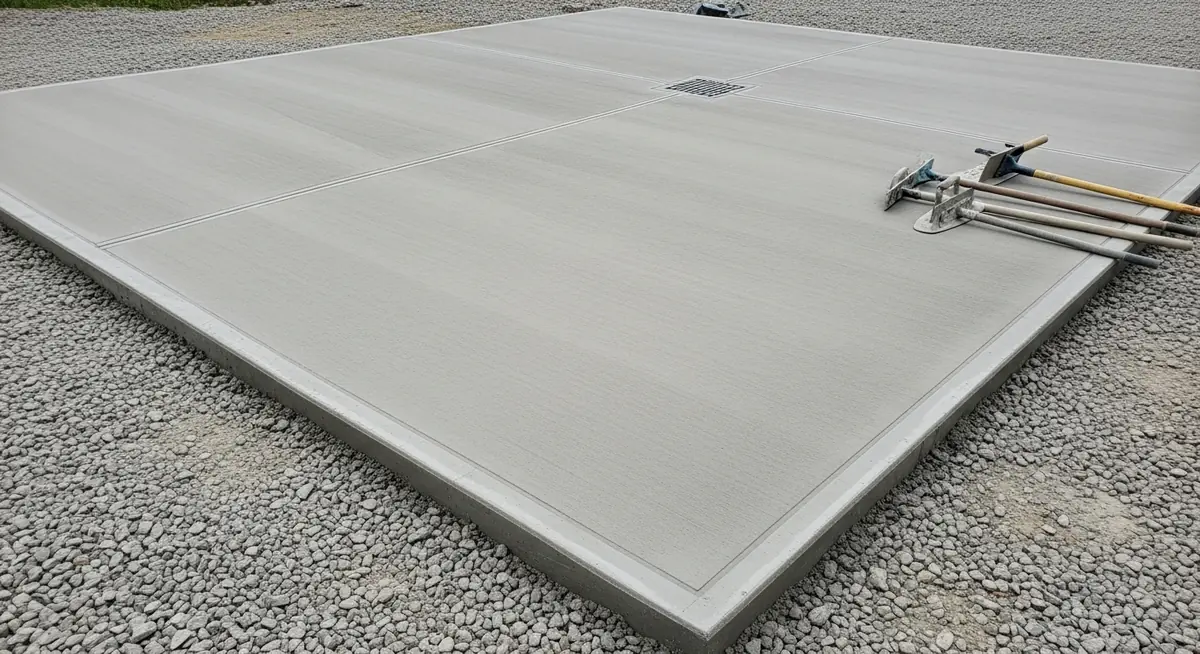
Real Pumas Job Site · Nashville, TN
How We Deliver Concrete Slab Installation
Soil Assessment
Sub-base soil is evaluated for clay content, drainage characteristics, and compaction potential before base design decisions are made.
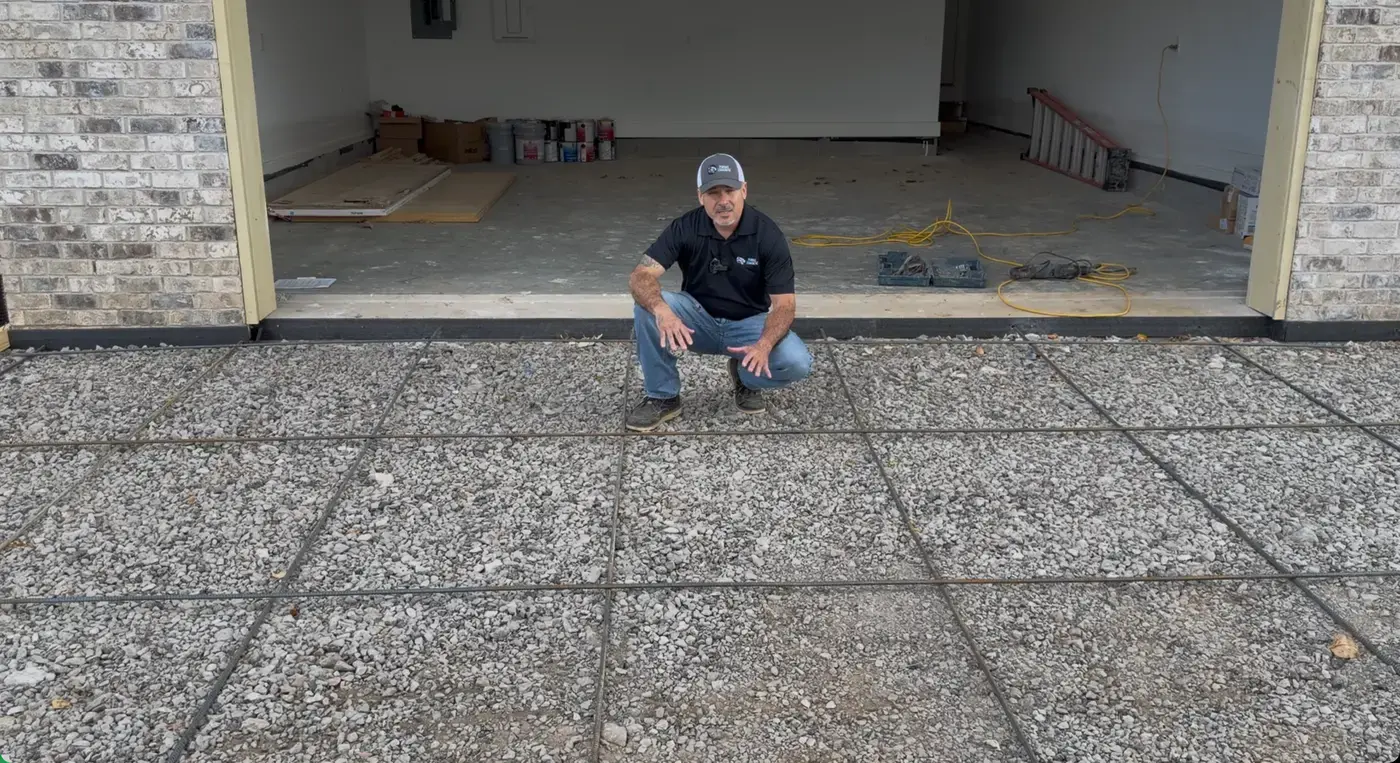
Excavation & Base Engineering
Excavation to designed depth, followed by base compaction in lifts with aggregate replacement of problematic clay sections as required.
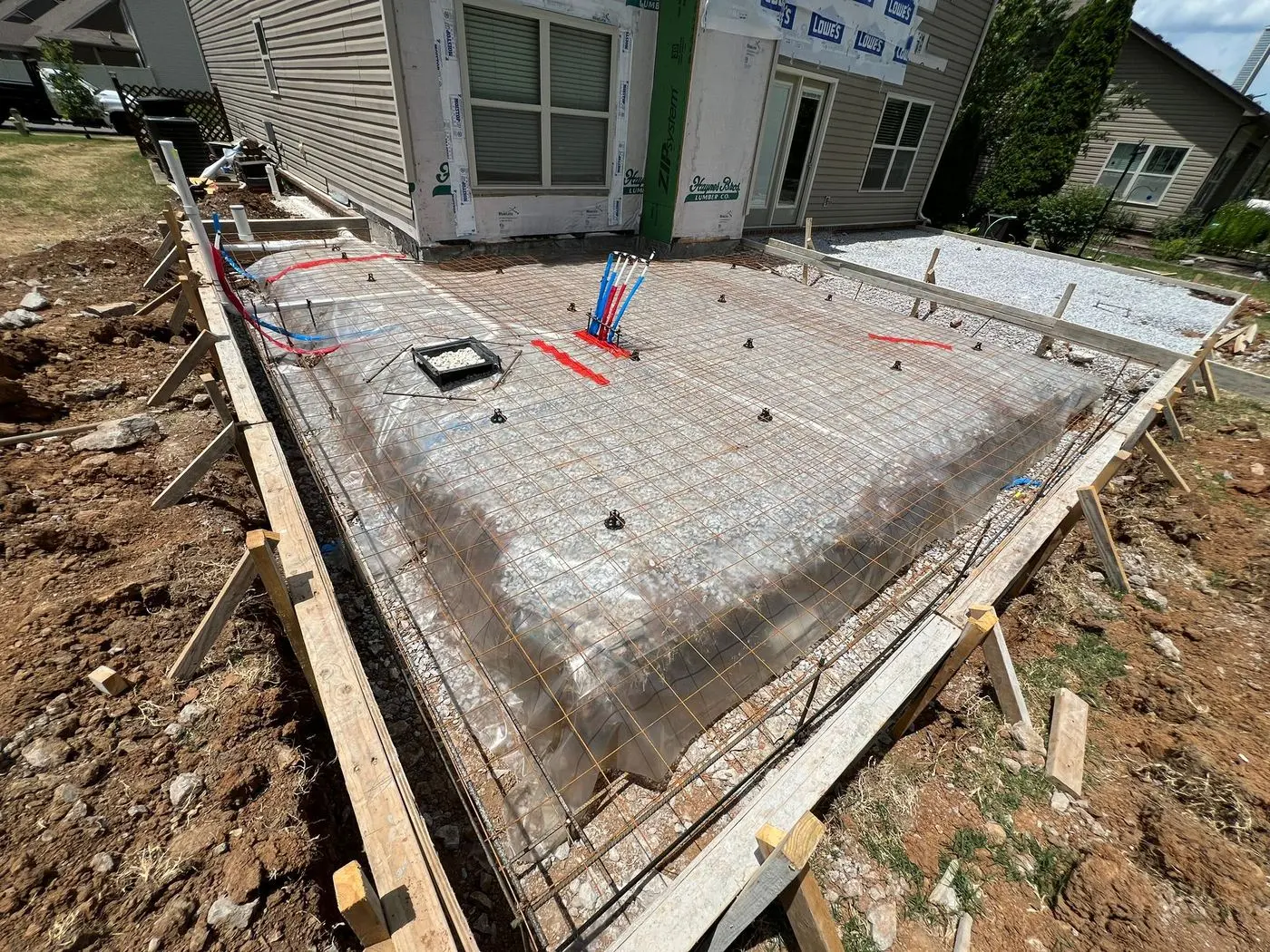
Vapor Barrier & Rebar
Vapor barrier is specified for interior slabs where moisture migration is a concern. Rebar grid is installed on chair rails to mid-slab elevation.
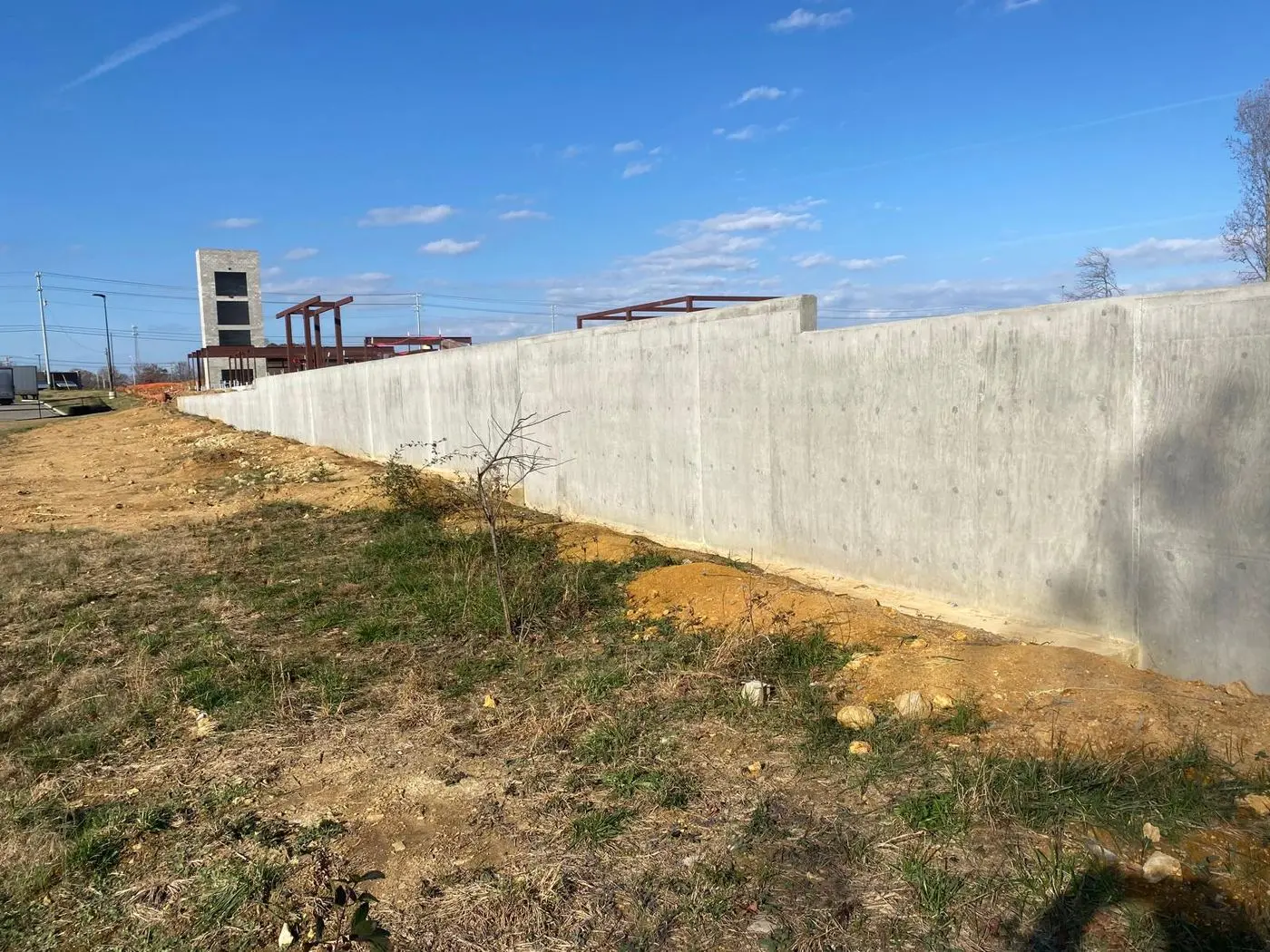
Pump-Poured PSIP Slab
4000 PSI concrete pump-poured or chute-poured depending on site access, screeded and finished to the designed surface specification.

Joint Cutting & Cure
Control joints are saw-cut at engineered intervals within the correct post-pour window. Cure management based on ambient conditions.
Certification
Structural Longevity Certificate issued documenting base preparation, mix spec, reinforcement method, and finished slab specification.
Discuss Your Project Why Tennessee Clay Changes Every Slab Calculation
Residential concrete slabs in Middle Tennessee face a specific problem that many other regions don’t: expansive clay that swells when wet and shrinks when dry, creating a base that moves continuously beneath the concrete. Standard wire mesh on a minimally compacted base cannot accommodate this movement without cracking. The result, a garage floor that settles unevenly and cracks across the middle within years, is not bad luck. It’s a predictable outcome of an inadequate specification for this soil type.
Clay-soil base engineering. We evaluate sub-base soil conditions before specifying base material depth, compaction procedure, and whether aggregate replacement of clay sections is required. Clay sub-base that hasn’t been assessed before pouring is the single most common cause of residential slab failure in Middle Tennessee. We don’t assume, we assess.
Rebar on chair rails, not wire mesh at grade. Full rebar grid elevated to mid-slab on chair rails provides tensile reinforcement where clay soil movement creates bending forces in the slab. Wire mesh at grade level is effectively structural decoration, it’s at the wrong elevation to resist the forces that Tennessee clay creates. This specification change is the most impactful single decision in residential slab installation in this market.
Vapor barrier where the soil demands it. Moisture migrating upward from clay subsoils through concrete is a real phenomenon in Middle Tennessee, particularly in low-lying areas and near drainage features. It creates efflorescence, surface staining, and coating delamination in garage and workshop environments. We specify vapor barriers based on site-specific moisture assessment, not as a default or an upgrade option.
Edge thickening for concentrated loads. Slabs that bear post supports, vehicle lifts, or heavy equipment receive edge and point thickening at load concentration points. A 4-inch slab is appropriate for standard vehicle parking. A slab that will support a 2-post vehicle lift needs thickening at the anchor points. We specify this before the forms are set.
PSIP Protocol. Applied to Every Project
4000 PSI Concrete · Full Rebar Grid · California Sand Finish · Structural Longevity Certificate
What Nashville Clients Say
Real homeowners and commercial clients across Middle Tennessee.
We are beyond thrilled with our new backyard patio from Pumas Concrete! Gumaro was our main contact throughout the entire project, and his expertise, passion, and clear communication made the whole pr…
Alana Seay
Backyard Patio
Nashville
I got three quotes. Los Pumas wasn't the cheapest, but they were the only ones who explained why my old driveway failed. Los Pumas gave me the PSIP certificate, showed me the rebar grid, and explained…
Samantha Toral
Driveway Installation
Nashville
Gumaro took the time to educate us on the Performance Structural Integrity Protocol (PSIP). He explained why the mandatory rebar reinforcement and the 4000 PSI mix are essential for longevity. Knowing…
Mary Fylypowycz
Driveway
Springfield, TN
As someone who manages commercial properties, finding a concrete contractor that shows up, communicates, and delivers quality work is rare. Los Pumas Concrete checked all the boxes. They handled our c…
Dakota Ballard
Commercial Concrete
Nashville
A Floor That Stays Level. For the Life of the Building.
Clay soil isn't a reason to expect a failing slab. It's a reason to specify correctly from the start.
Concrete Slab Installation. Frequently Asked Questions
Common questions about concrete slab installation in Nashville, TN.
Wire mesh placed flat at grade provides minimal structural benefit because it ends up at the bottom of the slab, not mid-slab where tensile reinforcement is effective. For a garage floor on Tennessee clay, full rebar on chair rails is the correct specification. The cost difference per square foot is modest; the performance difference over 20 years is significant.
In most Middle Tennessee climates, yes. Moisture migrating upward from clay subsoils through concrete creates efflorescence, surface staining, and conditions that delaminate floor coatings. We specify vapor barriers on all garage and workshop slabs in areas with known high moisture or clay-heavy subsoils.
Standard residential garage slabs are 4 inches. For three-car or larger garages, for slabs that will bear loaded vehicle lifts, or for workshops with heavy equipment, we specify 5 or 6 inches with modified reinforcement. Thickness is evaluated during the site consultation based on your specific use requirements.
A concrete overlay over a failed slab is a short-term cosmetic fix, not a structural solution. In most cases of significant cracking or differential settling, the correct solution is removal of the existing slab, assessment of sub-base conditions, and installation of a new PSIP-spec slab. We advise honestly on whether overlay is appropriate for your specific situation.
Still have questions? We're happy to talk through your project.
Contact UsRelated Services
PSIP Certified Concrete
Every Pumas project follows the Performance Structural Integrity Protocol (PSIP): 4000 PSI mix, rebar on chair rails, pump-poured, and backed by a Structural Longevity Certificate.
Learn More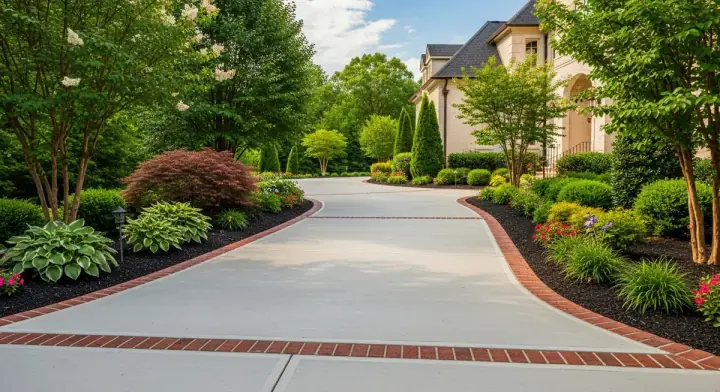
Concrete Driveway Installation
Professional driveway installation using PSIP-grade materials and techniques, proper drainage, full rebar reinforcement, and lasting curb appeal.
Learn More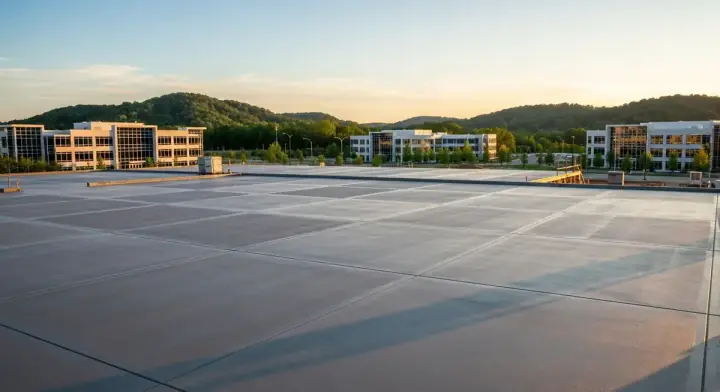
Commercial Flatwork
Large-scale commercial flatwork including sidewalks, parking lots, loading areas, and site concrete, delivered on schedule and to spec.
Learn More